For decades, the economic narrative of Northeast India has been tethered to a single, fragile geographical reality: the Siliguri Corridor. Measuring a mere 22 kilometers at its narrowest stretch, this “Chicken’s Neck” has symbolically and logistically defined the region as an isolated appendage to the mainland.
In the corridors of traditional policymaking, the Northeast was long treated as a frontier to be secured, rather than a gateway to be unleashed. However, a structural shift is underway. Under the canopy of India’s Act East Policy, the region is undergoing a profound conceptual evolution—transitioning from a landlocked bottleneck into a land-linked economic gravity center.
The Tyranny of Distance vs. The Proximity of Neighborhoods
When an enterprise in Guwahati or Imphal attempts to ship goods to western markets via Siliguri to the ports of Kolkata or Mumbai, it inherits what economists call the “tyranny of distance.” The domestic logistics tail is long, expensive, and prone to infrastructure disruptions.
Yet, if you look outward instead of backward, a completely different economic topography emerges. Guwahati is closer to Dhaka, Thimphu, and Naypyidaw than it is to New Delhi.
Re-imagining the Northeast means recognizing that its natural economic partners sit across international borders. The region shares 99% of its borders with international neighbors—Bangladesh, Bhutan, China, Myanmar, and Nepal—and a mere 1% with mainland India. The true economic dividend of the Northeast lies in bypassing internal geographic constraints and plugging directly into the high-growth markets of ASEAN and the Bay of Bengal initiative.
Sub-Regional Integration: The New Maritime & Terrestrial Arteries
The transition from a “Look East” philosophy to an “Act East” mandate is fundamentally about asphalt, concrete, and bilateral treaties. Three major structural corridors are rewriting the logistics playbook for the region:
1. The Bangladesh Transit Paradigm
The operationalization of agreements allowing India access to Bangladesh’s Chittagong and Mongla ports changes everything. For a state like Tripura or southern Assam, maritime access is no longer a distant dream. Goods can move down through streamlined Land Customs Stations, hitting deep-water ports in a fraction of the time it takes to traverse the chicken’s neck.
2. The India-Myanmar-Thailand (IMT) Trilateral Highway
This cross-border super-artery stretches from Moreh in Manipur through Myanmar and all the way to Mae Sot in Thailand. Once fully operationalized with standardized motor vehicle agreements, it creates a direct terrestrial pipeline into the heart of continental Southeast Asia.
3. The Kaladan Multi-Modal Project
By linking the eastern seaboard of India to the Sittwe port in Myanmar, and moving up via river transport to Mizoram, this multi-modal corridor provides a crucial alternative route that dramatically lowers transit timelines for heavy freight.
The Missing Link: Why Physical Corridors Need Digital Frameworks
Building highways and dredging rivers is only half the battle. A multi-lane highway crossing an international border is only as fast as the customs checkpoint sitting on top of it.
Currently, our frontier economies face immense administrative friction. Small-scale exporters, regional agrarian cooperatives, and local handloom aggregates struggle with paper-heavy compliance, arbitrary border delays, and a lack of formalized cross-border credit facilities.
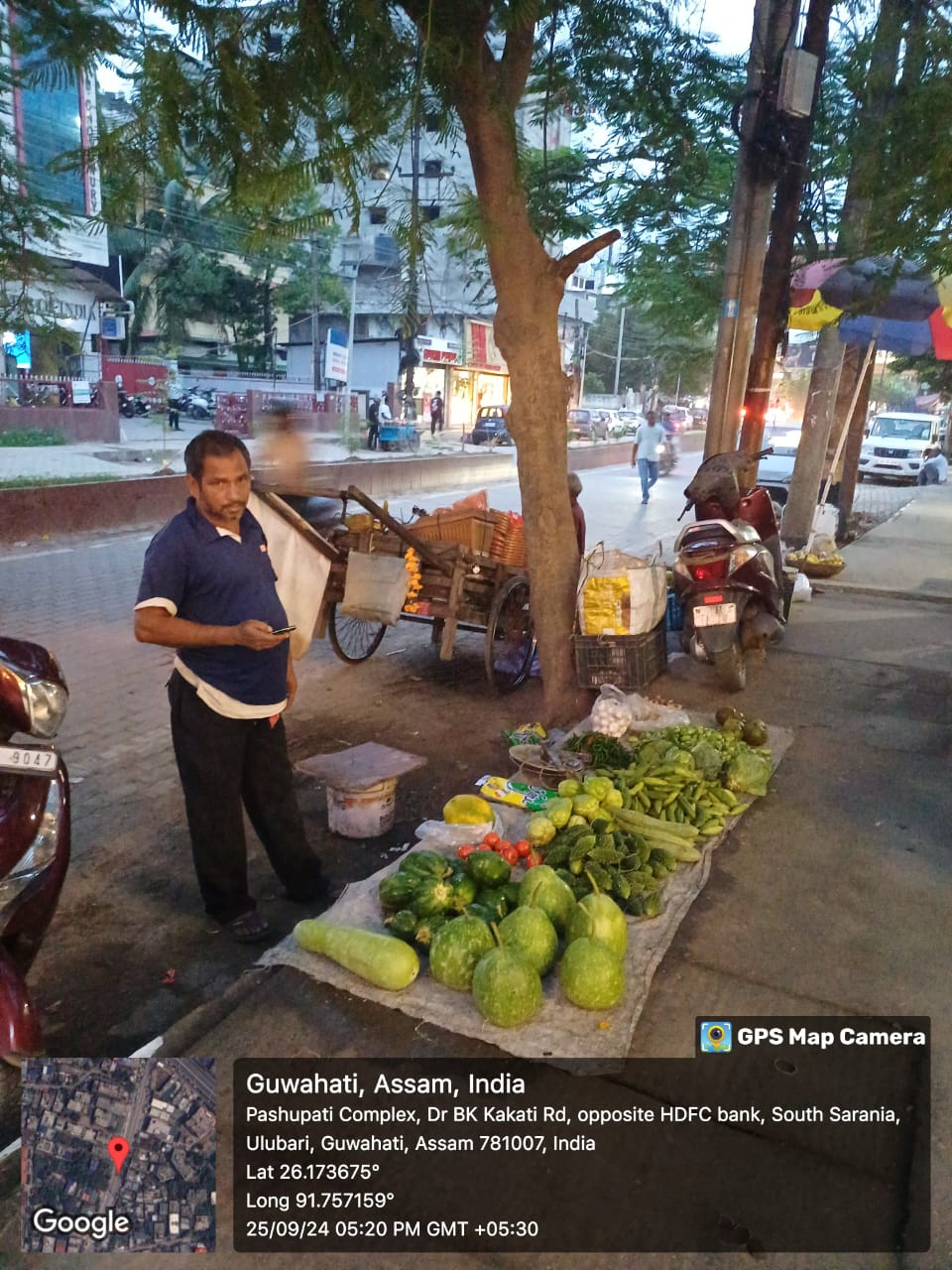
If we want the Act East Policy to benefit local populations rather than just large conglomerate transit cargo, we must democratize access to international trade. This is where the concept of digital formalization becomes critical. By implementing an integrated, friction-free interface—similar to a Universal Business Interface (UBI)—we can empower micro-entrepreneurs and local farmers to obtain licenses, verify compliance, and plug directly into global EXIM value chains from their smartphones.
The Road Ahead
Northeast India is no longer the backyard of the Indian economy; it is the front porch of India’s economic future. By systematically breaking down physical barriers through infrastructure and digital barriers through policy formalization, we can turn the “Chicken’s Neck” from a vulnerability into a footnote. The future of Indian trade doesn’t stop at the border—it begins there.